Week 2 - The Workweek Starts Again

My work officially started on Tuesday, and things quickly became quite busy after a long break during Easter. Jumping straight back into work was definitely a challenge, but also exciting.
My role mainly revolves around website development — exactly where my passion lies. Since this is a startup, the tasks are quite varied. So far, I’ve been redesigning the interface and improving the user experience of an Document Scan website with AI verification. I was also given the opportunity to design and build the frontend for a demo of a new project, which is a like a communication tool with AI Integration that detect sensitive information. Time really flies when I’m fully immersed in this kind of work.
For the frontend development, I’m using React, which is a framework I’m already familiar with. However, I’m also learning new tools like Tailwind CSS for styling and Vite for building the project. My coworker handles Backend development, which is done with Python and FastAPI, and I need to run the backend in a docker container. There are also other Interns working and training the AI model with Python and PyTorch, for the integration of AI in the project. It’s been a great learning experience so far, and I’m really enjoying the work.
One interesting difference I’ve noticed is the working culture compared to Germany. Back there, I used to start work at 6:00 AM, while here in France things feel more relaxed. I typically start at 8:45 AM and finish at 4:45 PM, including a one-hour lunch break. Thanks to daylight saving time, there are still a couple of hours of sunlight left after work.
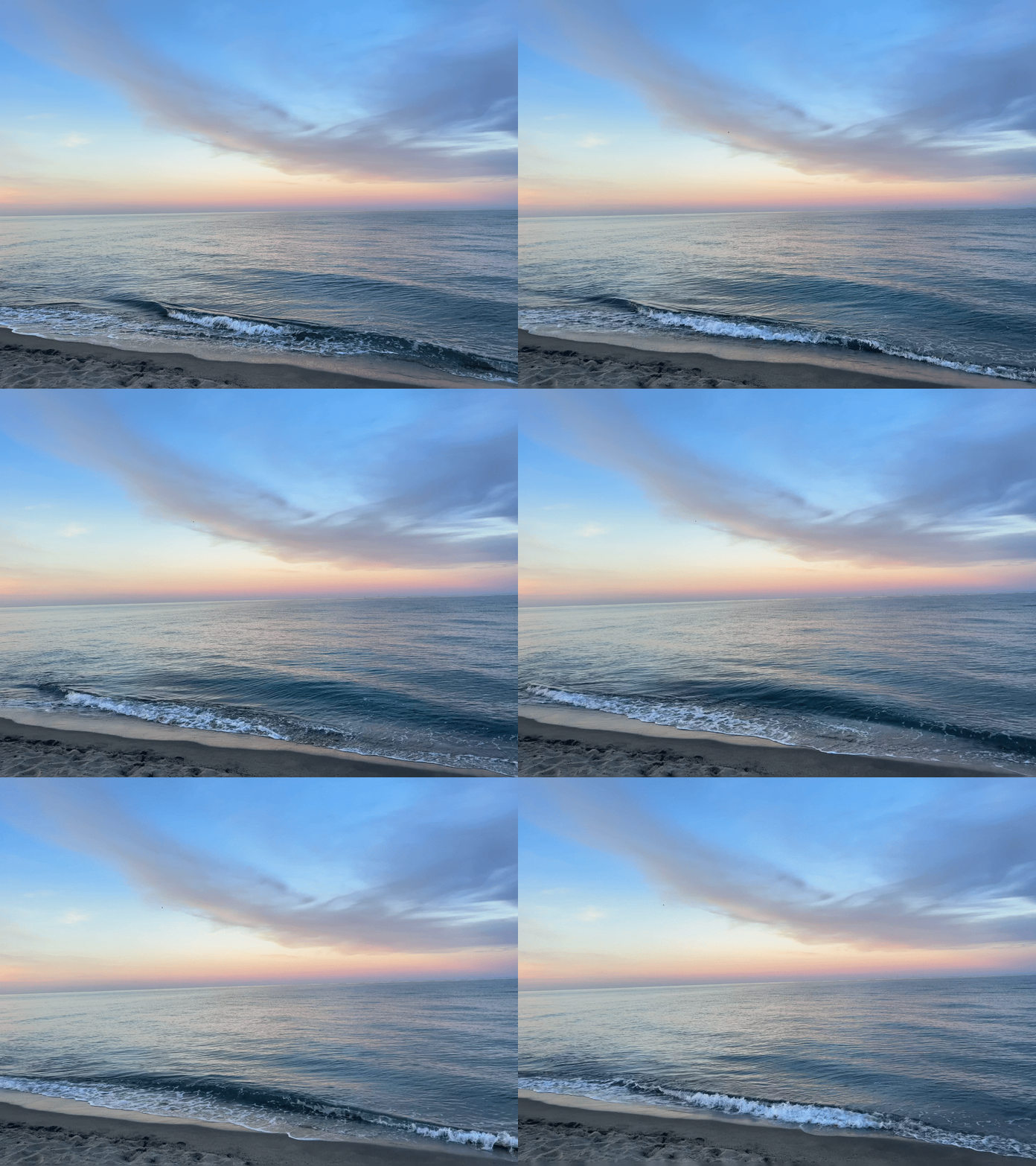 Sunset by the sea is really calming
Living by the Sea
I often take advantage of the extra daylight by going for a short walk along the beach — unless I need to do grocery shopping. Living by the sea has its perks: fresh seafood here is both affordable and high quality. Honestly, that’s something I’m really going to miss when I go back to Berlin.
That easy access to fresh fish also pushed me to try something a bit ambitious this week.
Homemade Bouillabaisse
Well, since I didn’t get a chance to try this famous dish in Marseille (and honestly didn’t feel like paying 80€ per person), I decided to recreate it at home — more like a family version, using ingredients that are easy to find in a French supermarket. I went to Grand Frais for everything since their seafood and fish selection is already quite well prepared. I got black tiger shrimp, some shellfish, and four different kinds of fish. In general, you can use almost any fish, but it’s best to mix softer and firmer textures. I went with conger eel, cod, batoids, and Cape hake — but you can easily swap depending on what’s available.
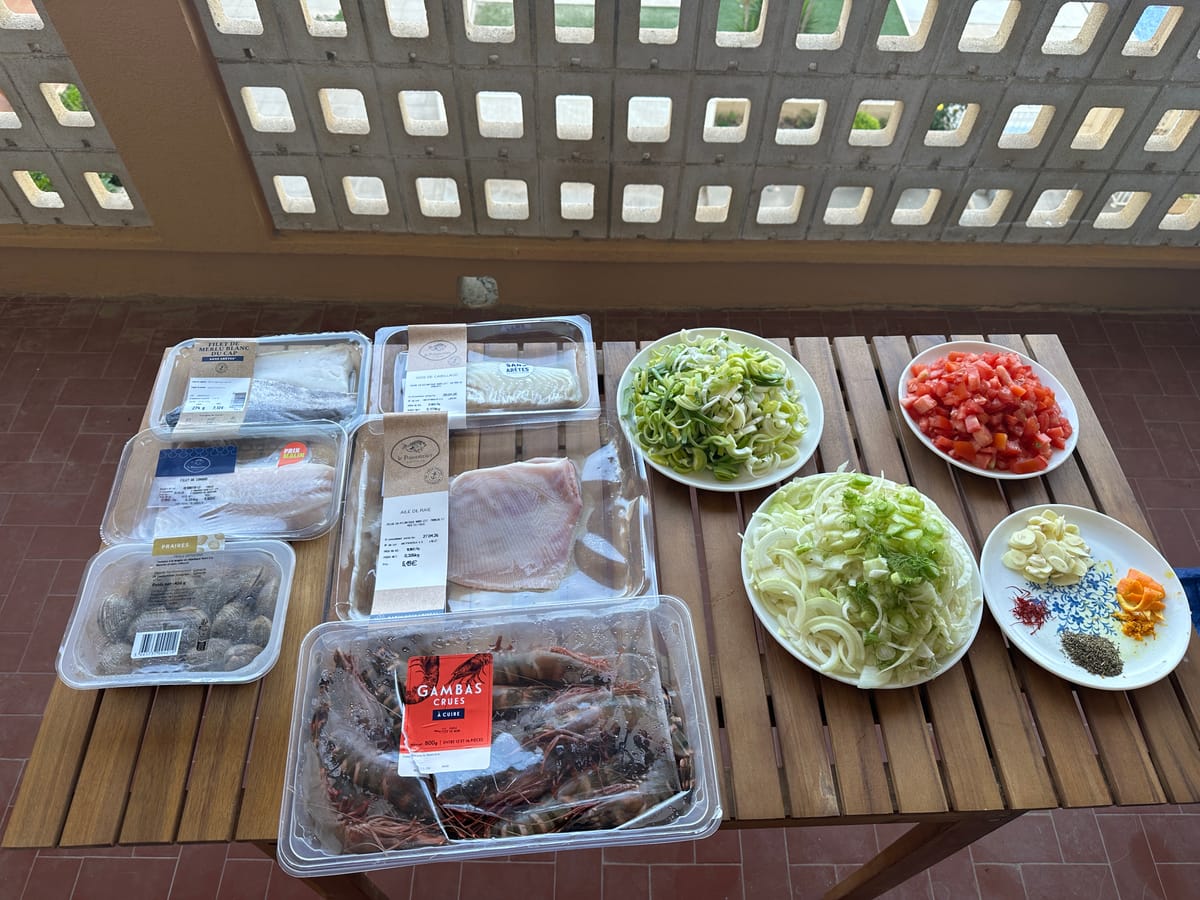 You can use most kinds of fish for this recipe
For the vegetables, leek and fennel are basically non-negotiable (this is France after all). Then of course tomatoes, onion, and garlic are essential. For aromatics, saffron, thyme, and a bit of orange peel bring everything together with that classic flavor.
First, prep everything — that’s really important here. Slice the onion, leek, fennel, and garlic. Cut the tomatoes into chunks. Soak the saffron in a bit of warm liquid and set aside the thyme and orange zest. Then move on to the seafood. If you have clams, rinse them and let them sit in salted water so they clean themselves. Peel the shrimp, but keep the heads and shells — that’s where all the flavor comes from for the stock. Cut the fish into large chunks and keep track of which is which, since they go in at different times. Once everything is ready, keep the seafood chilled until needed.
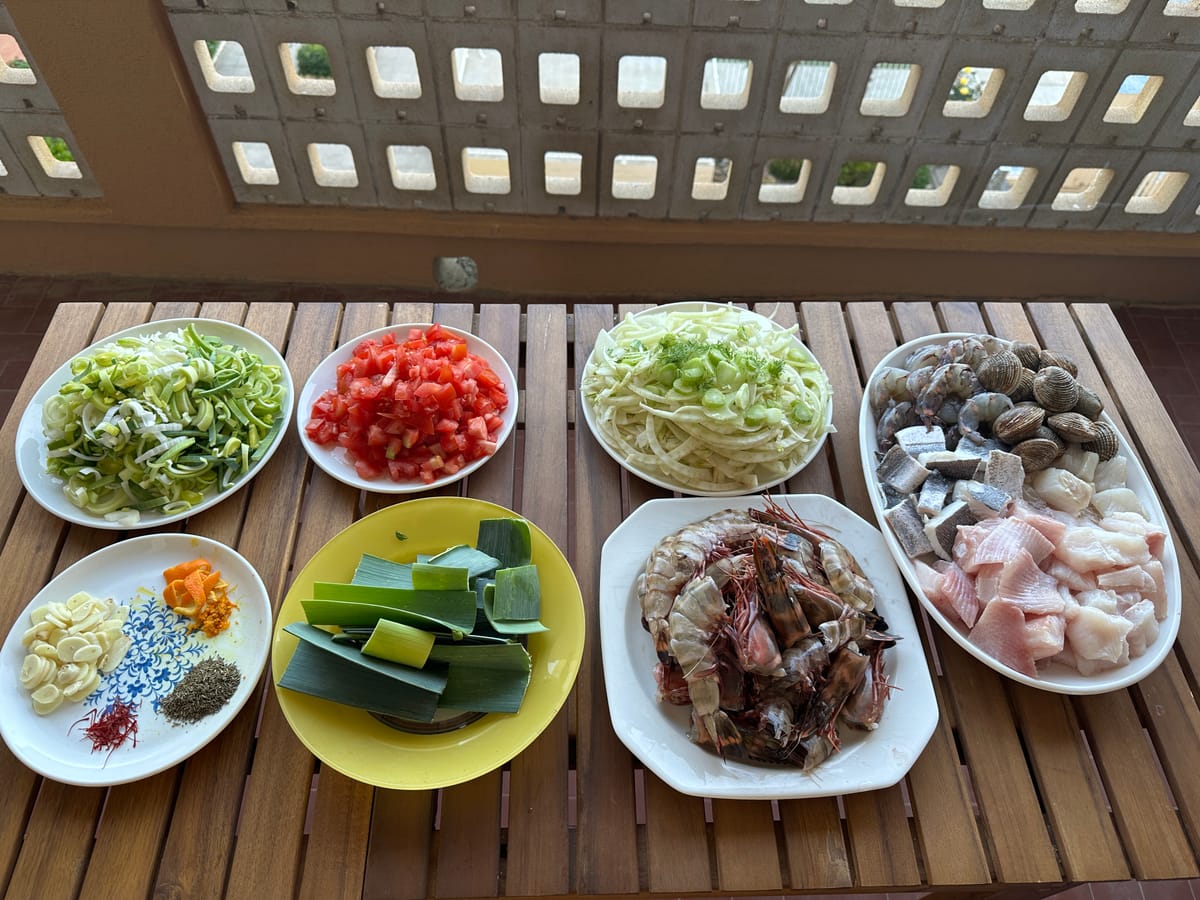 Nice and prepped — ready to cook
Now the real fun begins. Don’t be shy with the olive oil — heat a good amount in a large pot and throw in the shrimp heads and shells. Press them hard while frying until they turn deep orange and release all that flavor. Then deglaze with about 100 ml of white wine and let it reduce slightly. Add a bit of the chopped vegetables, a couple slices of garlic, and a splash of Pastis if you have it. After that, pour in around a liter of water and let it simmer gently (no boiling!) for about 15–20 minutes. Strain everything well — that’s your base.
In the same pot, cook the rest of the vegetables slowly in olive oil until soft — no browning. Add the tomatoes, tomato paste if you like, thyme, saffron (with the liquid), orange zest, salt, and pepper. Let that cook for a few minutes before pouring the shrimp stock back in. Let it simmer gently so all the flavors come together.
After about an hour total, we can say hello to our fishy friends again. The conger eel and ray go in first since they need more time. After a few minutes, add the hake, then finally the cod. Keep everything at a gentle simmer — no boiling, or the fish will fall apart.
At the very end, throw in the clams and shrimp. Give it just a couple of minutes — the clams should open and the shrimp turn pink. Remove anything that stays closed. Take out the orange zest, adjust seasoning, and let everything rest for a few minutes before serving.
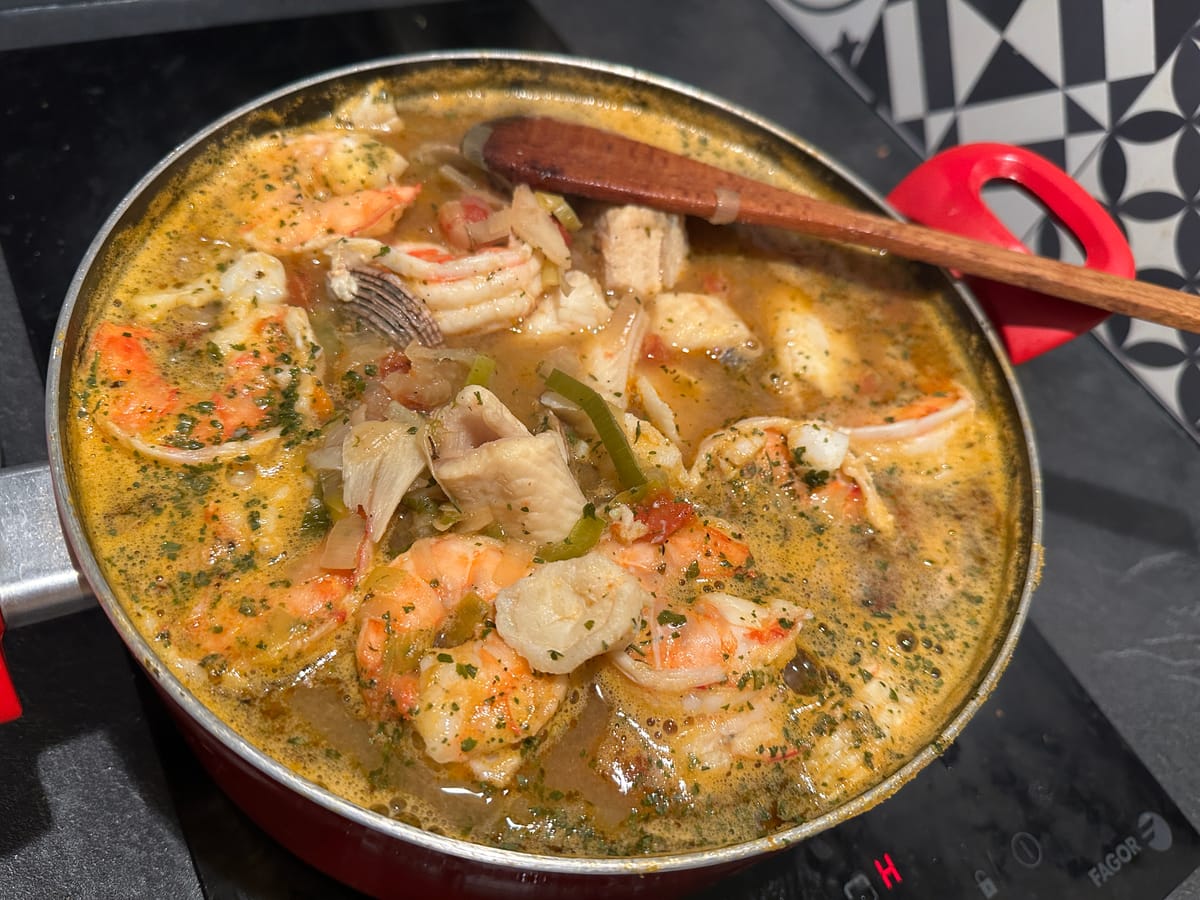 Voilà, about 80€ worth of restaurant-level bouillabaisse for roughly 8 portions (okay, it took around 3 hours, but totally worth it).
Don’t forget to toast your baguette in the oven — you can’t enjoy bouillabaisse without a proper one.
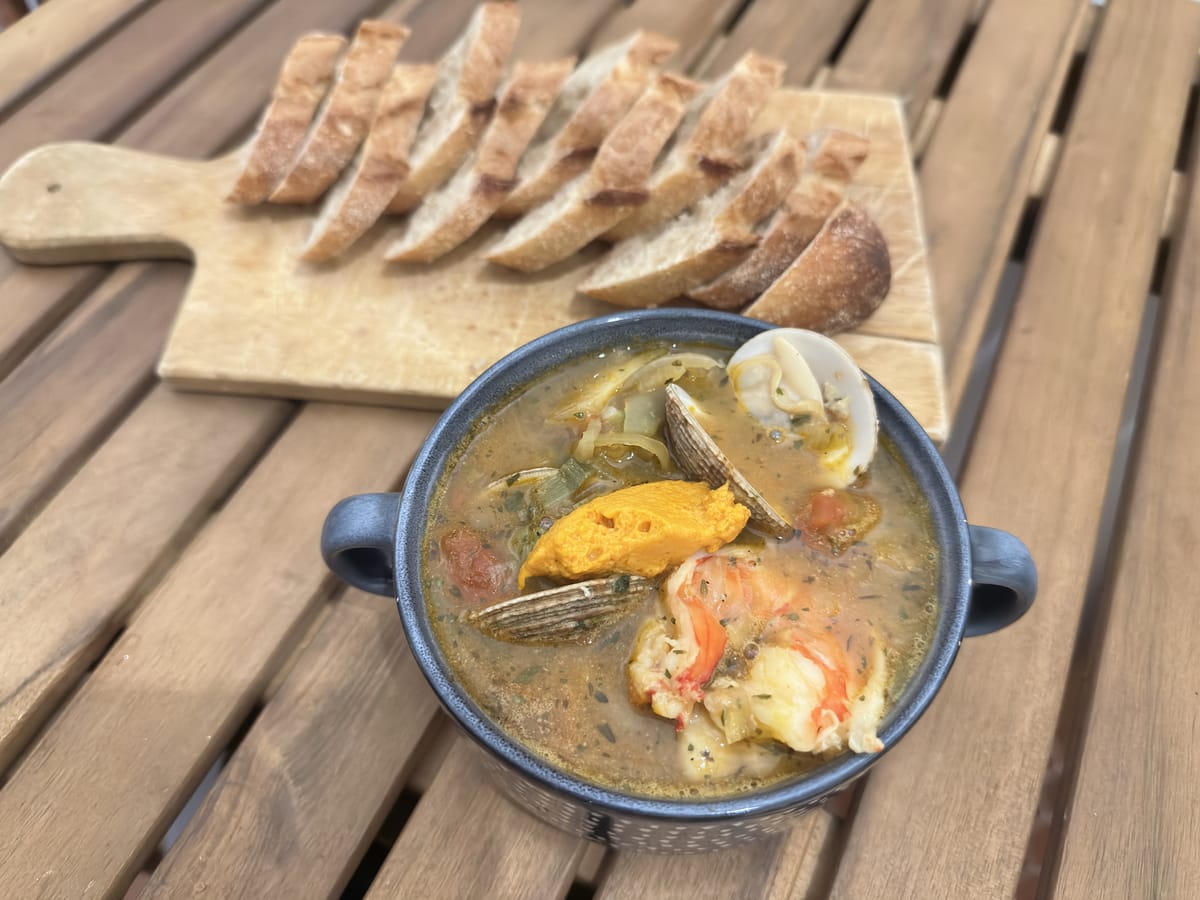 Rouille is a saffron- and chili-flavored mayonnaise, which is traditionally served with bouillabaisse. It is used to flavor the soup and add richness and depth of flavor.
Don’t want to brag, but if I ever open a bistro, this might just be my signature dish.
Bon appétit — and definitely give it a try yourself 🍲